
Case Study
Synergy Building Sheffield GPR Scanning
Non-intrusive Ground Penetrating Radar surveys using Proceq GP8000 technology and 3D augmented reality imaging to support refurbishment planning.
Brief Summary
Holemasters Demtech carried out Ground Penetrating Radar (GPR) scanning works at the Synergy Building in Sheffield as part of a non-intrusive structural investigation programme ahead of planned building refurbishment works.
Using advanced Proceq GP8000 scanning equipment and augmented reality imaging software, multiple structural elements were surveyed to identify reinforcement layouts, concrete cover depths, and embedded structural features. The information gathered was compiled into detailed interpretive reports to assist the structural engineering team in planning future works safely and accurately.
Background
The project took place at the Synergy Building in Sheffield as part of a wider refurbishment and redevelopment programme. Prior to the commencement of intrusive construction activities, the client required detailed information regarding the existing structural composition of the building.
Due to limited available as-built information and the need to minimise disruption and unnecessary damage to the structure, a non-intrusive investigation method was selected. Holemasters Demtech were appointed to undertake specialist GPR scanning works to provide the structural engineers with accurate data regarding reinforcement arrangements and internal concrete characteristics.
The purpose of the investigation was to improve understanding of the existing structure ahead of future refurbishment works, enabling the design team to make informed engineering decisions while reducing risk during later construction phases.
Requirement
Holemasters Demtech were required to undertake detailed GPR scanning surveys across multiple structural elements throughout the building. The scope of works included:
- Identification and mapping of reinforcement bar layouts within reinforced concrete elements
- Determination of reinforcement spacing and orientation
- Measurement of concrete cover depths to reinforcement
- Detection of embedded structural features and anomalies within the concrete
- Production of clear interpretive reporting for use by the structural engineering team
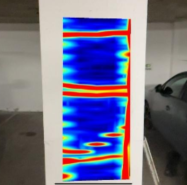
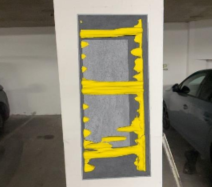
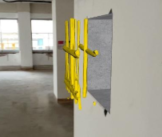
- Generation of 3D augmented reality visualisations to provide enhanced understanding of internal structural arrangements
The surveys were required to be completed using non-destructive testing techniques in order to preserve the integrity of the existing structure while still obtaining highly accurate structural data.
All findings were presented in an accessible format, combining visual outputs with numerical data including reinforcement spacing, concrete cover measurements, and reinforcement positioning to support future structural assessments and refurbishment planning.
Constraints and Challenges
One of the primary challenges of the project was obtaining accurate structural information without causing damage to the existing building fabric. As the investigation formed part of a live refurbishment planning process, maintaining a fully non-intrusive approach was essential.
Additional challenges included:
- Surveying multiple structural elements with varying reinforcement densities and configurations
- Ensuring accurate interpretation of complex reinforcement arrangements within existing concrete
- Delivering clear and easily understandable data for use by the structural engineering team
- Minimising disruption within the building while maintaining programme requirements
To overcome these challenges, advanced high-resolution scanning equipment and specialist interpretation software were utilised to maximise data clarity and accuracy.
The inclusion of 3D augmented reality imaging also helped simplify the presentation of complex structural findings, allowing the client and engineers to visualise embedded elements more effectively than through traditional scan outputs alone.
Techniques and Hardware Used
The investigation works were completed using the Proceq GP8000 Ground Penetrating Radar scanning system alongside the latest interpretation and augmented reality software platforms.
The Proceq GP8000 system enabled high-resolution scanning of reinforced concrete elements, providing accurate data relating to:
- Reinforcement bar positioning
- Reinforcement spacing and orientation
- Concrete cover depths
- Internal structural characteristics and embedded features
Advanced scanning techniques were employed across multiple structural areas to ensure comprehensive coverage and reliable data collection.
In addition to traditional GPR outputs, 3D augmented reality imaging was produced to visually demonstrate the layout and nature of embedded reinforcement and structural components within the concrete. These visualisations provided the structural team with an enhanced understanding of the existing construction and supported interpretation of the survey data.
All collected information was compiled into detailed interpretive reports containing both graphical outputs and numerical analysis, allowing straightforward integration into the ongoing structural assessment and refurbishment design process.

Conclusion
The GPR investigation works at the Synergy Building in Sheffield were completed successfully and provided the client and structural engineering team with a detailed understanding of the existing reinforced concrete structure.
Through the use of advanced Proceq GP8000 scanning technology and augmented reality visualisation techniques, Holemasters Demtech delivered accurate, high-quality structural data in a clear and accessible format. The information obtained allowed the refurbishment project to progress with improved confidence and reduced risk.
The project was completed efficiently, with minimal disruption to the site, and the client was particularly satisfied with the high level of detail and clarity provided within the final reporting package.
Get in Touch
Ready to discuss your project requirements? Contact our expert team for a free consultation.
Contact Details
Phone
0808 175 4017Head Office
Suite 14, Blackpool Technology
Management Centre, Faraday Way,
Blackpool FY2 0JW
HDL Structural Solutions has depots throughout the UK.
Part of the Holemasters Demtech Ltd group – delivering specialist services across the UK since 1995.